Skip to content
Eden Prairie Pollinator Garden

Plant guide

What's growing at the garden

These are the 21 native grasses and wildflowers Landbridge Ecological sowed in fall 2025. Seeded prairies take a few years to fill in, so some of these won't show up until 2027 or later.

Showing 21 plants

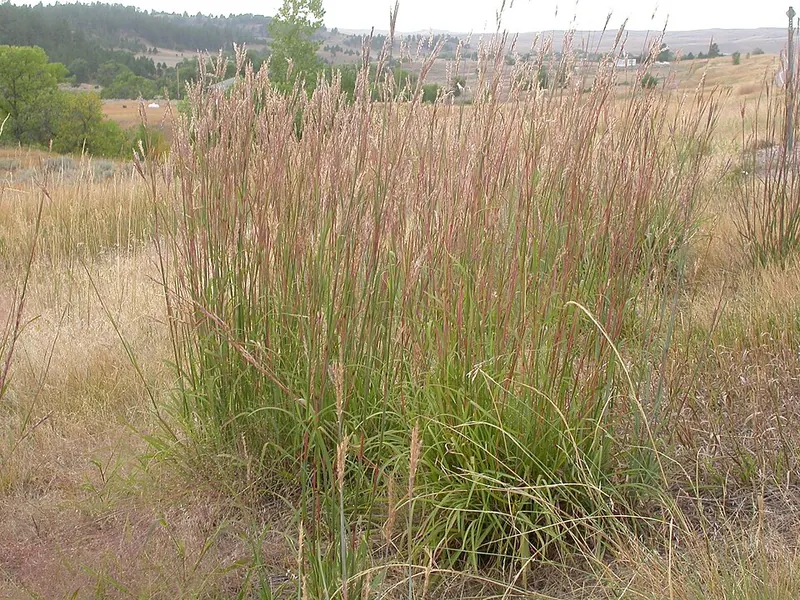
  • Big Bluestem (Andropogon gerardii)

    Big Bluestem

    Andropogon gerardii

    Looks best
    Seed heads Aug–Sept; copper-red in fall
    Color
    Blue-green, turning copper-red
    Height
    4–7 ft

    Minnesota's signature tall prairie grass. Its three-part "turkey foot" seed heads shelter birds and feed skipper butterfly caterpillars.
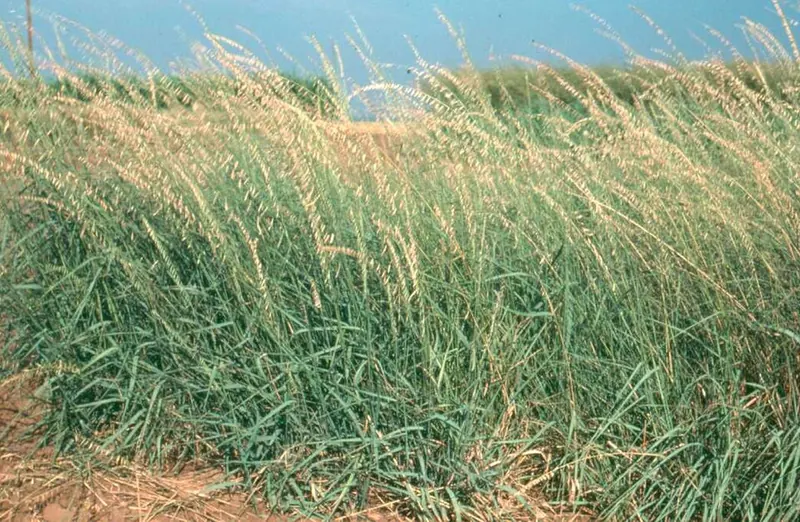
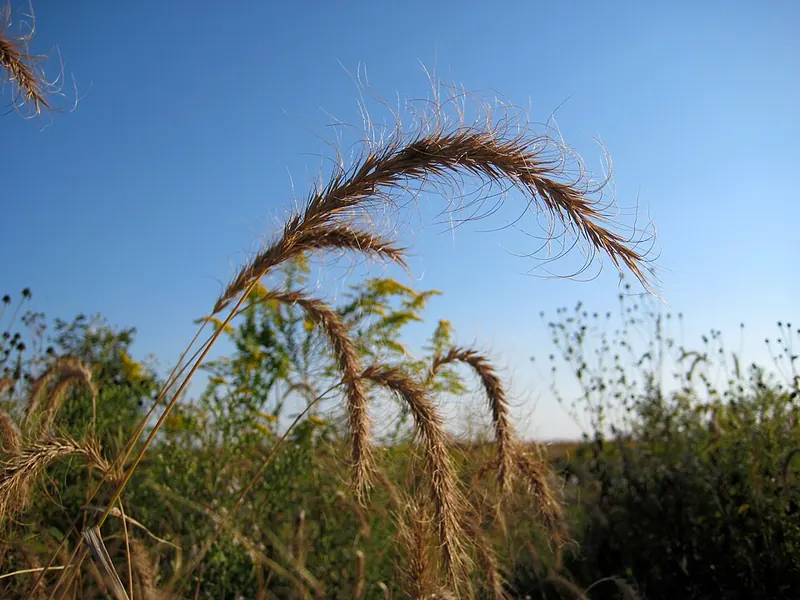
    Photo: Matt Lavin from Bozeman, Montana, USA, CC BY-SA 2.0

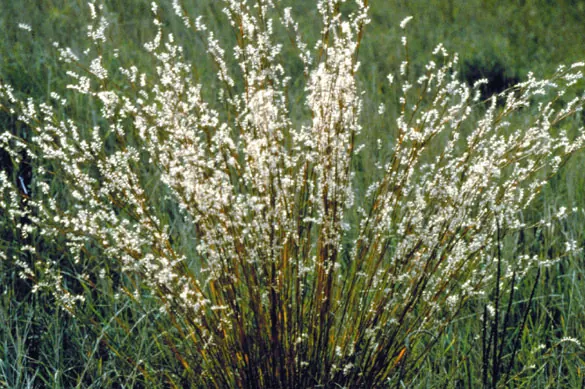
  • Side-oats Grama (Bouteloua curtipendula)

    Side-oats Grama

    Bouteloua curtipendula

    Looks best
    Flowers July–Sept
    Color
    Green, with tiny orange-red flowers
    Height
    1–3 ft

    Little oat-like seeds dangle from one side of the stem. It feeds the caterpillars of several skipper butterflies and seed-eating birds.

    Photo: Public domain

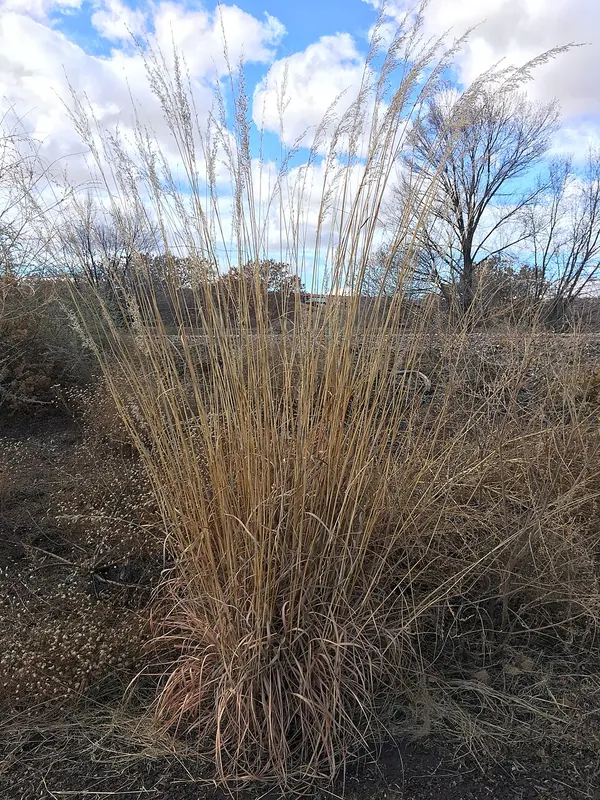
  • Canada Wild Rye (Elymus canadensis)

    Canada Wild Rye

    Elymus canadensis

    Looks best
    Nodding seed heads July–Sept
    Color
    Blue-green, with bristly heads
    Height
    2–5 ft

    One of the first prairie grasses to establish, it holds the soil while slower plants put down roots.

    Photo: Crazytwoknobs, CC BY 3.0

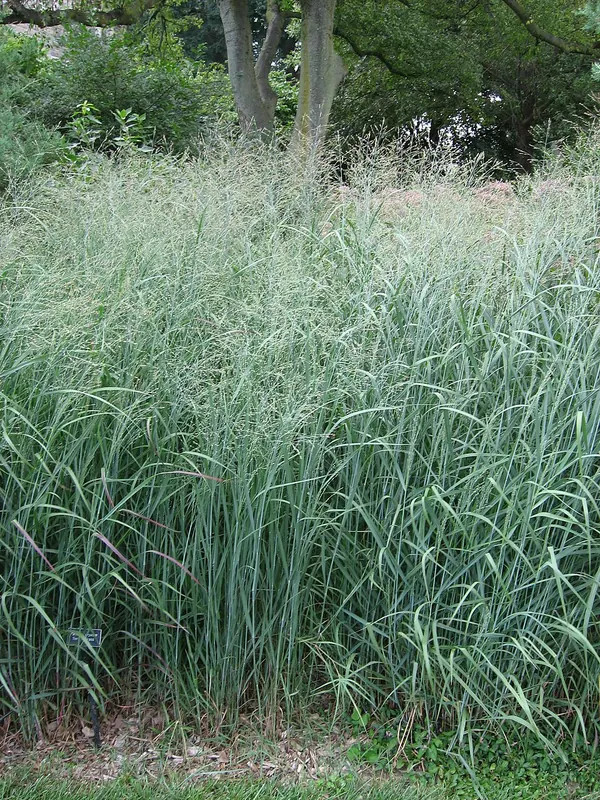
  • Switchgrass (Panicum virgatum)

    Switchgrass

    Panicum virgatum

    Looks best
    Airy seed heads Aug–Sept; gold in fall
    Color
    Green, turning golden-yellow
    Height
    3–6 ft

    Its dense clumps give birds and insects winter cover, and its seeds feed sparrows and juncos.

    Photo: Chhe (talk), Public domain

  • Little Bluestem (Schizachyrium scoparium)

    Little Bluestem

    Schizachyrium scoparium

    Looks best
    Fall and winter color
    Color
    Blue-green, turning copper-orange
    Height
    2–3 ft

    Handsome all year. It is a host plant for several native skipper butterflies, and ground-nesting bees dig in the bare soil between its clumps.

    Photo: Public domain

  • Indian Grass (Sorghastrum nutans)

    Indian Grass

    Sorghastrum nutans

    Looks best
    Golden plumes Aug–Sept
    Color
    Green, with golden-bronze plumes
    Height
    3–7 ft

    Its feathery golden plumes light up the late-summer prairie, and its seeds feed birds into winter.

    Photo: Matt Lavin from Bozeman, Montana, USA, CC BY-SA 2.0

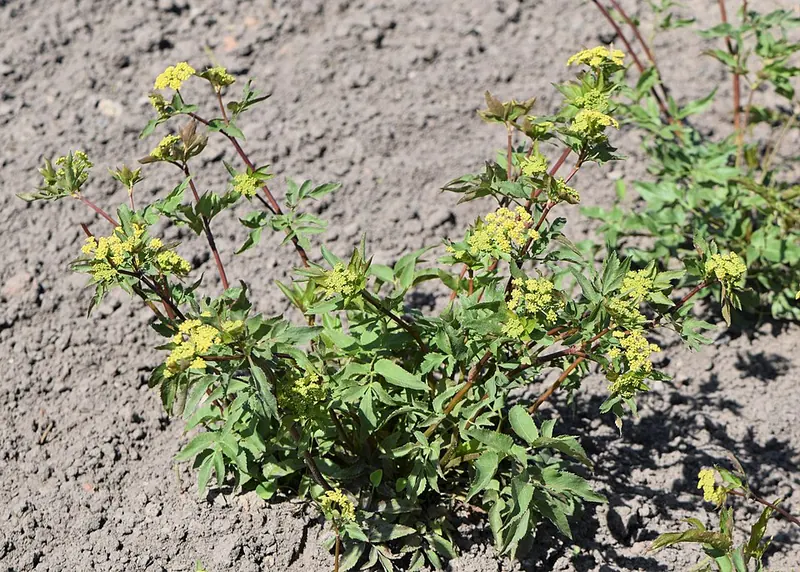
  • Golden Alexanders (Zizia aurea)

    Golden Alexanders

    Zizia aurea

    Blooms
    May–June
    Color
    Yellow
    Height
    1–2 ft

    One of the first prairie flowers each spring: an early meal for small native bees and a host plant for black swallowtail caterpillars.

    Photo: Krzysztof Ziarnek, Kenraiz, CC BY-SA 4.0

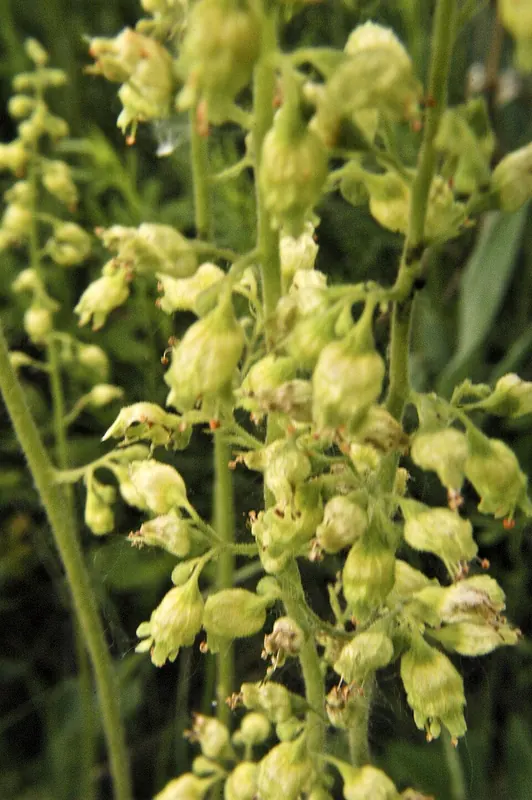
  • Prairie Alumroot (Heuchera richardsonii)

    Prairie Alumroot

    Heuchera richardsonii

    Blooms
    May–July
    Color
    Greenish cream
    Height
    1–3 ft (flower stalks)

    Tiny bell-shaped flowers rise on tall stalks above a low rosette of leaves. Small bees visit them in early summer.

    Photo: Frank Mayfield, CC BY-SA 2.0

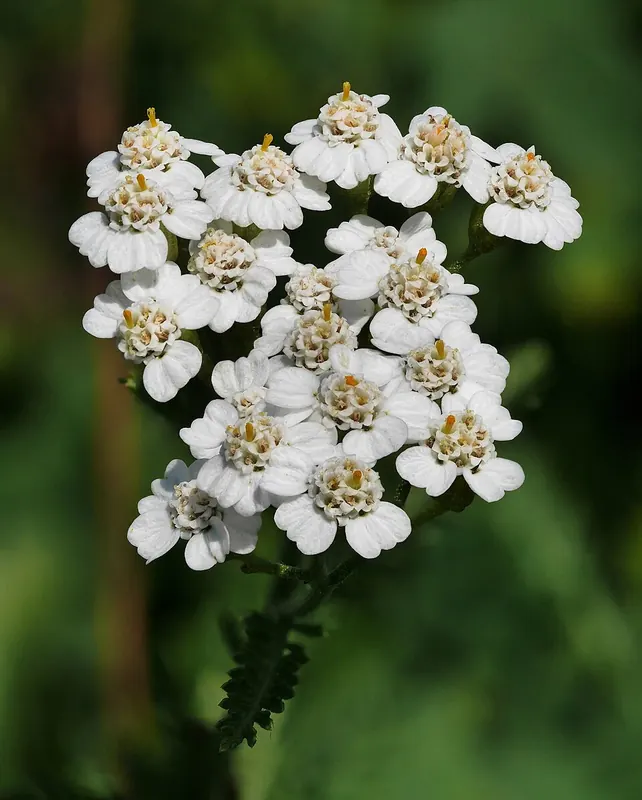
  • Yarrow (Achillea millefolium)

    Yarrow

    Achillea millefolium

    Blooms
    June–Sept
    Color
    White
    Height
    1–3 ft

    Flat clusters of tiny flowers make an easy landing pad for small bees, flies and beetles.

    Photo: Petar Milošević, CC BY-SA 4.0

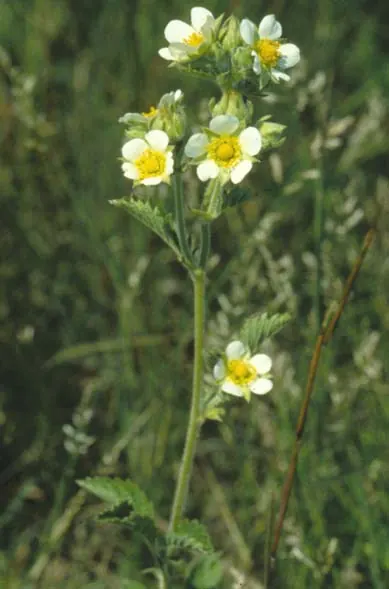
  • Prairie Cinquefoil (Drymocallis arguta)

    Prairie Cinquefoil

    Drymocallis arguta

    Blooms
    June–Aug
    Color
    Creamy white to pale yellow
    Height
    1–3 ft

    Its five-petaled flowers draw small native bees, and its seed heads stand through winter.

    Photo: Public domain

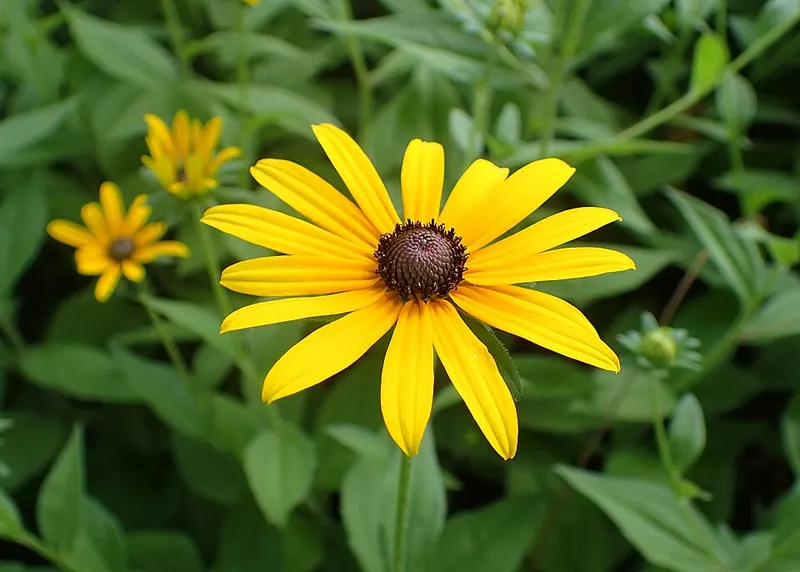
  • Black-eyed Susan (Rudbeckia hirta)

    Black-eyed Susan

    Rudbeckia hirta

    Blooms
    June–Sept
    Color
    Golden yellow with a dark center
    Height
    1–3 ft

    Often one of the first wildflowers to bloom in a new prairie. Watch for it in the first few summers.

    Photo: Krzysztof Ziarnek, Kenraiz, CC BY-SA 4.0

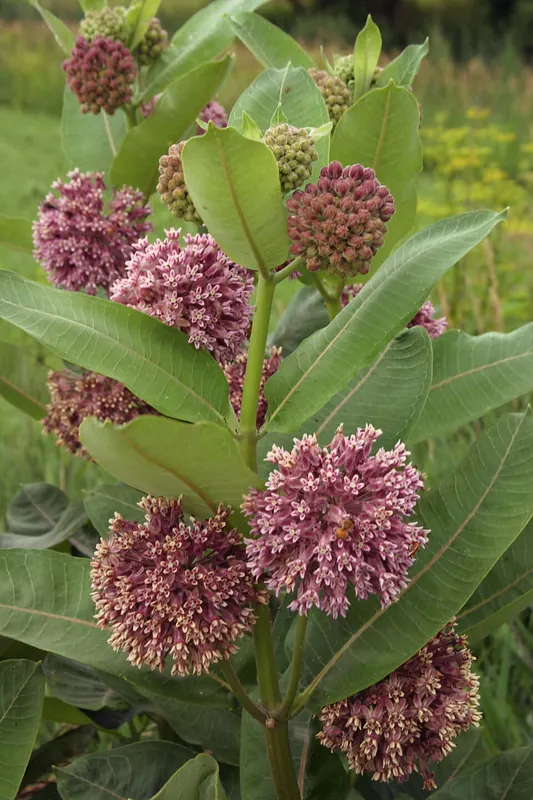
  • Common Milkweed (Asclepias syriaca)

    Common Milkweed

    Asclepias syriaca

    Blooms
    June–Aug
    Color
    Dusty pink
    Height
    2–5 ft

    The monarch butterfly's host plant: monarch caterpillars eat only milkweed. Its sweet-smelling flowers feed many bees and butterflies.

    Photo: Amos Oliver Doyle, CC BY-SA 4.0

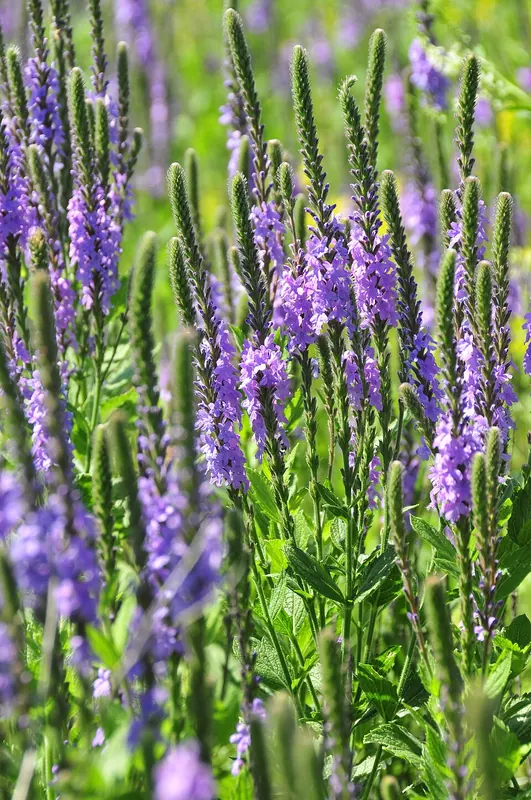
  • Hoary Vervain (Verbena stricta)

    Hoary Vervain

    Verbena stricta

    Blooms
    June–Sept
    Color
    Purple-blue
    Height
    2–4 ft

    Slender flower spikes bloom from the bottom up over many weeks, feeding bees, including a few that specialize on vervain.

    Photo: USFWS Mountain-Prairie, Public domain

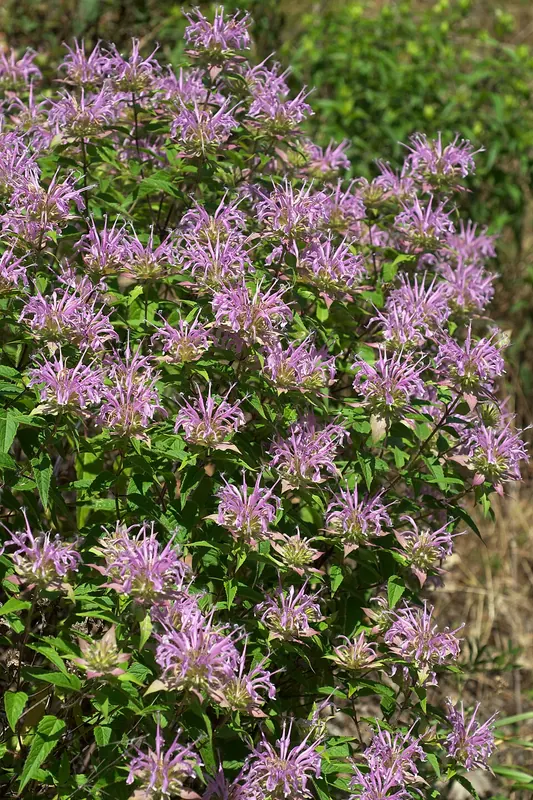
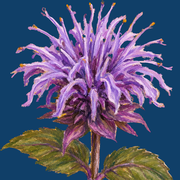
  • Wild Bergamot (Monarda fistulosa)

    Wild Bergamot

    Monarda fistulosa

    Blooms
    July–Aug
    Color
    Lavender
    Height
    2–4 ft

    The flower on our sign. Bumble bees, butterflies and hummingbirds all visit its shaggy blooms, and its leaves smell like oregano.

    Photo: Eric Hunt, CC BY-SA 4.0

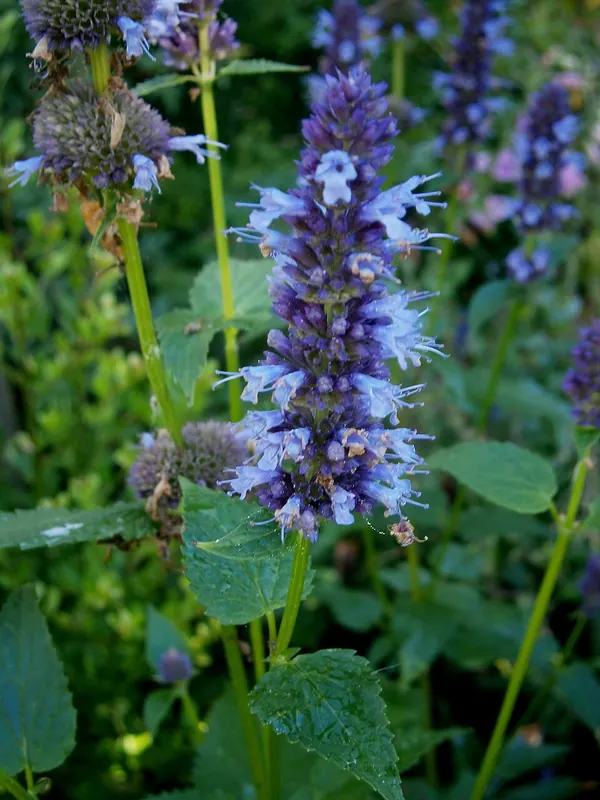
  • Fragrant Giant Hyssop (Agastache foeniculum)

    Fragrant Giant Hyssop

    Agastache foeniculum

    Blooms
    July–Sept
    Color
    Lavender-blue
    Height
    2–4 ft

    A bumble bee favorite. Crush a leaf and it smells like licorice.

    Photo: Meneerke bloem, CC BY-SA 3.0

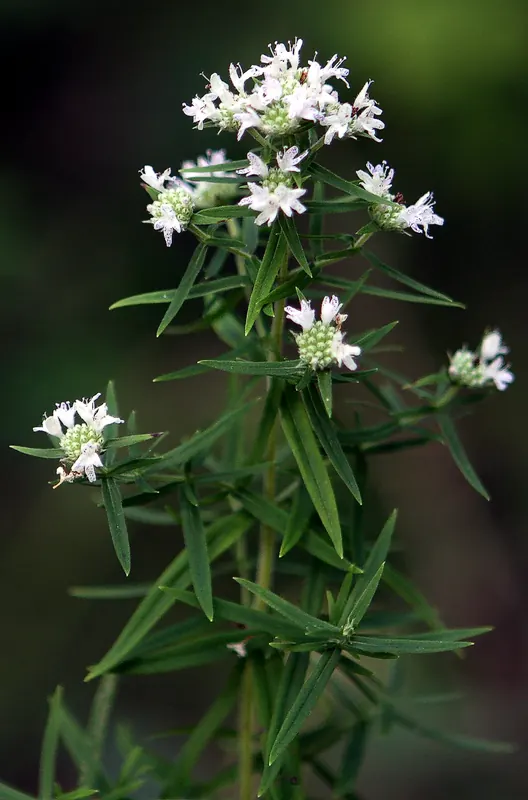
  • Mountain Mint (Pycnanthemum virginianum)

    Mountain Mint

    Pycnanthemum virginianum

    Blooms
    July–Sept
    Color
    White
    Height
    1–3 ft

    Small but mighty: few plants attract a wider variety of bees, wasps and butterflies. Its leaves smell minty.

    Photo: Hardyplants at English Wikipedia, Public domain

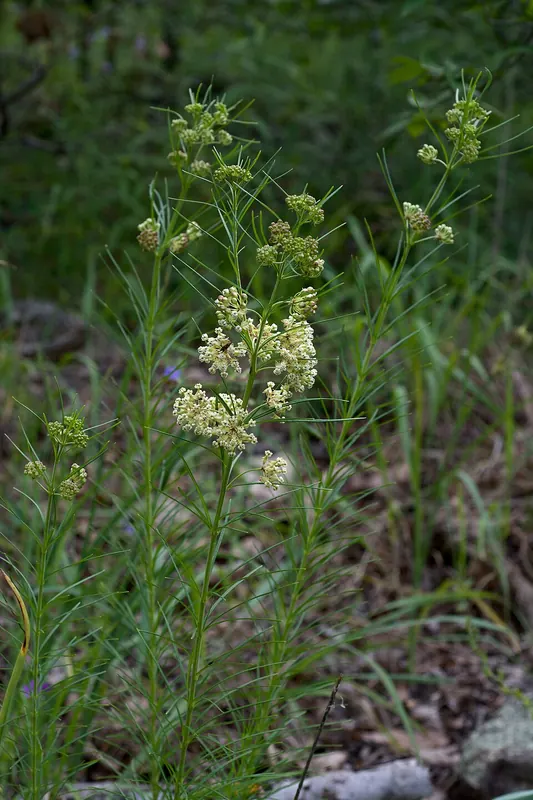
  • Whorled Milkweed (Asclepias verticillata)

    Whorled Milkweed

    Asclepias verticillata

    Blooms
    July–Sept
    Color
    White
    Height
    1–2 ft

    A smaller milkweed with needle-like leaves. It also feeds monarch caterpillars and blooms later in summer.

    Photo: Eric Hunt, CC BY-SA 4.0

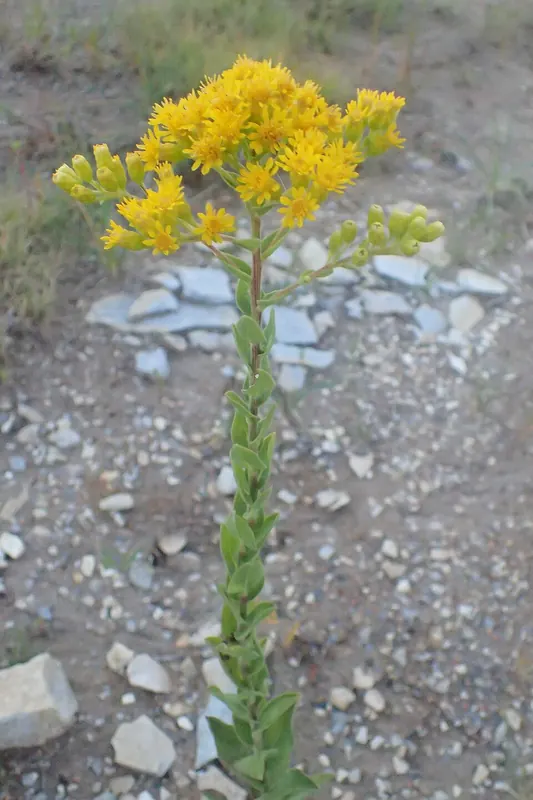
  • Stiff Goldenrod (Solidago rigida)

    Stiff Goldenrod

    Solidago rigida

    Blooms
    Aug–Sept
    Color
    Yellow
    Height
    2–5 ft

    Flat-topped yellow clusters provide late-summer nectar for bees, butterflies and beetles.

    Photo: Krzysztof Ziarnek, Kenraiz, CC BY-SA 4.0

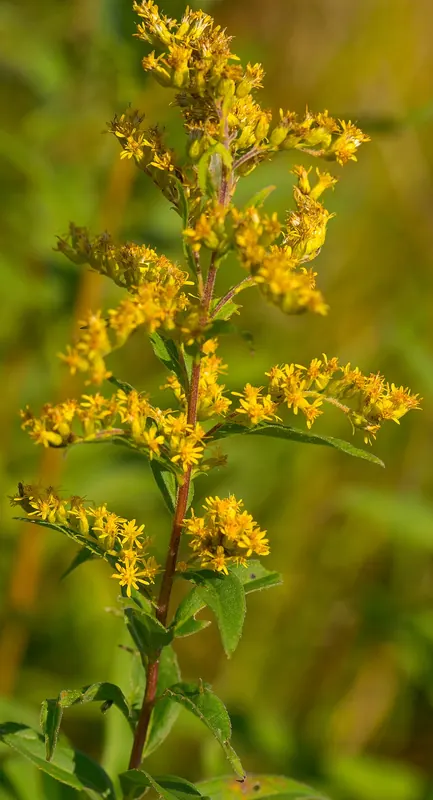
  • Showy Goldenrod (Solidago speciosa)

    Showy Goldenrod

    Solidago speciosa

    Blooms
    Aug–Oct
    Color
    Bright yellow
    Height
    2–4 ft

    A late-season feast for bees and migrating monarchs. Goldenrod doesn't cause hay fever; that's ragweed.

    Photo: Joshua Mayer from Madison, WI, USA, CC BY-SA 2.0

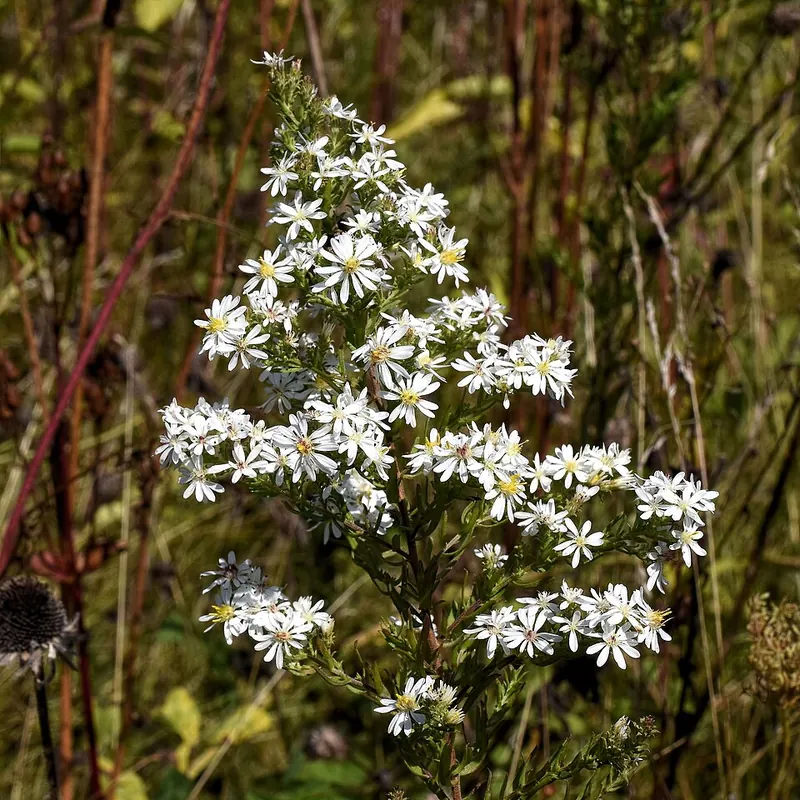
  • Heath Aster (Symphyotrichum ericoides)

    Heath Aster

    Symphyotrichum ericoides

    Blooms
    Aug–Oct
    Color
    White with yellow centers
    Height
    1–3 ft

    Covered in hundreds of tiny daisy-like flowers, it is one of the last meals for bees before winter.

    Photo: davecz2, CC BY-SA 4.0

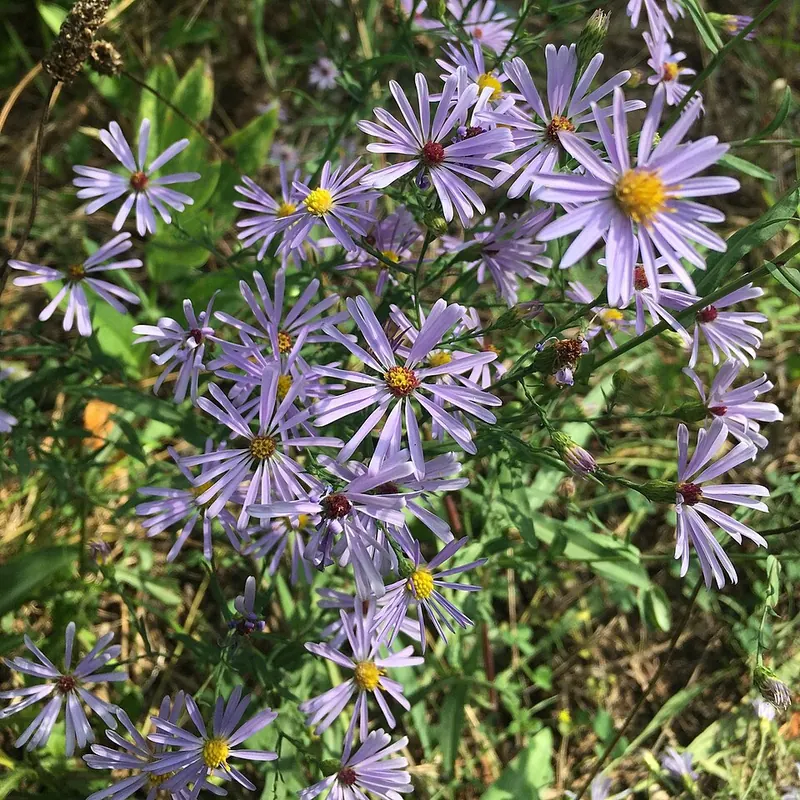
  • Smooth Blue Aster (Symphyotrichum laeve)

    Smooth Blue Aster

    Symphyotrichum laeve

    Blooms
    Aug–Oct
    Color
    Sky blue to lavender
    Height
    2–4 ft

    Its blue flowers fuel monarchs on their fall migration and bees stocking up for winter.

    Photo: Kathleen Houlahan Chayer, CC0